
Animal Valley: Idle Merge Game
AppQuantumSimulation
4.190.00 Reviews
- Version
- 1.3.0
- Installs
- 100.00K
- Age Rating
- Everyone
Screenshots

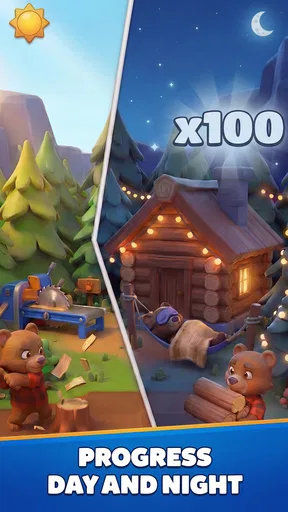
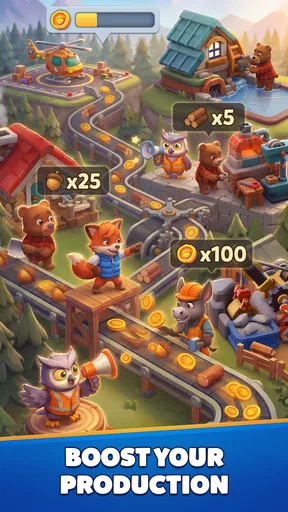

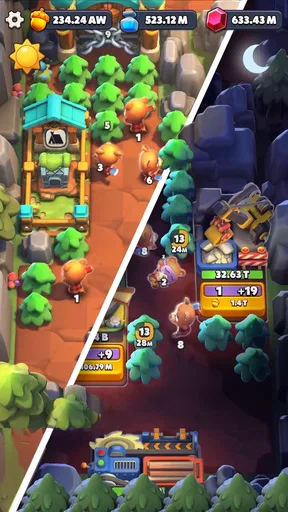
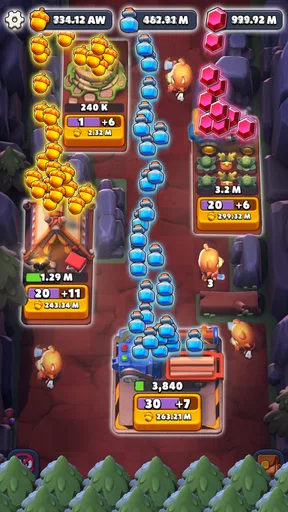
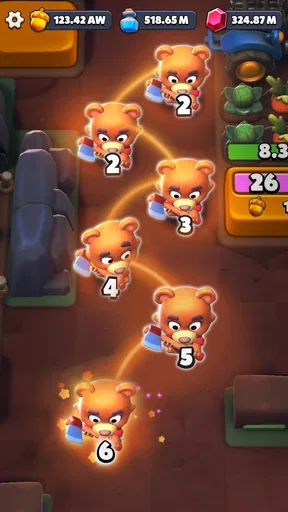
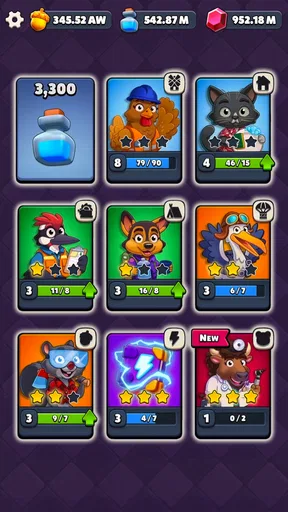
Our Review of Animal Valley: Idle Merge Game
 Analysis by Appyee
Animal Valley: Idle Merge Game is the kind of simulation I can open for a few minutes, make visible progress, and leave without feeling that I have abandoned a complicated project. Its central idea is easy to understand: develop an animal village and combine matching animals while the settlement continues to move forward in an idle-building format. That makes it approachable for a first-time player, especially if you enjoy calm management games more than fast reflex challenges.
After spending time with it, I found the appeal comes from the steady rhythm rather than from a dramatic story or demanding controls. You look for the next useful combination, improve the village’s overall direction, and decide whether to keep playing now or return later. The game is free to start, is suitable for Everyone, and comes from AppQuantum. Its current version is 1.3.0, and it runs on Android devices using Android 7.1 or later.
What to expect when you begin
The first thing to understand is that this is not a traditional city simulator where you manage every resident, road, and resource in detail. The animal-merging layer is the main source of interaction. Instead of overwhelming me with a long list of systems, the game points toward a simple loop: combine related animals, turn the results into progress, and use that progress to make the village feel more developed.
That simplicity is useful, but it also sets the right expectations. If you want a deep economy with complex production chains, staff scheduling, or extensive construction planning, this will probably feel light. If you prefer a relaxed game that gives you small decisions and a clear sense of movement, the format works much better. I would describe it as a gentle progression game with village-building decoration and management layered around the merge activity.
The idle element is especially important for people who do not want to remain in a game continuously. You can make a few decisions during a short break, close the app, and come back ready to continue. I would not treat that as a replacement for active play; the most satisfying moments still come from deliberately arranging your next merge and choosing what deserves attention. The idle structure simply makes the game less demanding when your time is limited.
Its audience is broad. A younger player can understand the basic objective, while an adult may enjoy it as a low-pressure way to unwind. The Everyone content rating supports that accessible presentation. Still, parents should remember that the free download includes in-app purchases ranging from $1.99 to $99.99 per item, so device purchase controls are worth checking before handing it to a child.
The mood suits short, repeatable sessions
I found the game most comfortable in short sessions: a few minutes while waiting for an appointment, a quick check during a lunch break, or a quiet wind-down before bed. The village gives those brief visits a purpose, because there is usually something to combine or improve rather than an empty screen waiting for a long commitment.
That design also means the game can become repetitive if you expect every visit to introduce a completely new idea. The satisfaction comes from gradual improvement and from recognizing the best immediate move. Players who need constant surprises may prefer a more story-driven simulation or a management game with larger strategic consequences.
One useful mindset is to see each session as a small planning problem. Rather than merging the first available pair automatically, I try to look at the surrounding board and consider whether that action will create space, unlock a better chain, or leave awkward pieces behind. This small pause makes the simple mechanics feel more thoughtful without making them stressful.
Setting up your first village
The initial setup is reassuringly straightforward. Install the game, launch it, and follow the opening guidance instead of trying to optimize everything immediately. The early steps are designed to show the basic interaction, so rushing ahead or searching for a perfect layout is unnecessary. I recommend treating the opening as a tutorial you can actively learn from rather than as a test you must pass flawlessly.
Before making purchases, I would play long enough to decide whether the merge-and-village rhythm actually suits you. The free entry point gives you room to form that opinion. The presence of optional purchases does not mean you need to spend right away, and I found it more sensible to understand the normal progression first. That way, any later purchase is a deliberate convenience rather than a reaction to confusion.
For a first-time player, the most important setup decision is mental rather than technical: decide whether you want a relaxed pace or a more active one. If you are checking in occasionally, focus on clear combinations and village progress. If you have more time, pay attention to how each merge affects the space available for future actions. Both approaches can work, but they produce different experiences.
How I approached the opening board
I began by identifying which animals could be combined immediately and then looked at what the resulting piece might do to the available room. That second glance matters. A merge is not only a reward; it also changes the shape of your working area. When the board starts to feel crowded, simply making any combination can create a short-term improvement but a poor follow-up position.
My practical advice is to keep a small mental priority order: first look for a merge that clears an awkward location, then consider one that advances a useful chain, and only afterward choose a move because it looks attractive. This is one of the game’s quiet strengths. It teaches planning through very small choices, so a beginner can improve without needing a complicated guide.
I also avoided spending every available action as soon as it appeared. Leaving a little flexibility can be valuable, particularly when several possible combinations are visible. The game is more enjoyable when you give yourself room to react rather than turning the board into a sequence of automatic taps.
Your first meaningful success
The first satisfying milestone is not simply completing a merge. It is understanding why that merge helped the village. Once a combination produces a more useful animal or improves the space around your settlement, the relationship between the board and the building side becomes clearer. That is the point where the game stops feeling like a collection exercise and starts feeling like a small simulation.
For me, the best opening move was one that solved two problems at once: it advanced the animal progression and made the remaining area easier to read. That kind of result is more valuable than chasing the most obvious pair. A clean board gives you better choices later, while a careless merge can leave several isolated pieces that take longer to organize.
When you reach that first meaningful success, resist the temptation to tap through everything immediately. Take a moment to notice what changed. Which area now has more room? Which animals are likely to become useful next? What can wait? This habit turns the idle format into a more deliberate experience and helps prevent the common beginner mistake of confusing activity with progress.
A realistic everyday routine
Imagine opening Animal Valley during a ten-minute commute as a passenger. I would first collect my bearings, check the available combinations, and make the move that creates the cleanest next position. If the village has advanced enough to offer a new decision, I would handle that before closing the game. Later, perhaps in the evening, I would return and repeat the process rather than trying to complete everything in one sitting.
This routine works because it separates observation from impulse. The morning visit is for a quick, useful action; the later visit is for deciding how to use the new possibilities. It also keeps the game from taking over your free time. The app is at its best when it fills small gaps in your day, not when you feel obliged to monitor it constantly.
Another good use case is a quiet break after work. The merge actions are simple enough to be relaxing, but there is still a modest puzzle in choosing the order of actions. I would not recommend it during a moment when you need intense stimulation, rapid competition, or a strong narrative hook. Its pleasure is gradual and tactile rather than explosive.
Confusion points that can slow you down
The biggest source of confusion is assuming that every available merge has equal value. It does not. A combination may be valid but still unhelpful if it leaves the surrounding area cluttered or consumes a piece that would have supported a better chain. New players can easily fall into the habit of tapping the first matching animals they see.
A second issue is the difference between visible progress and useful progress. A larger animal or a more developed-looking village feels rewarding, but the best move is sometimes the quieter one that preserves options. If the board is becoming crowded, prioritize space and flexibility. If space is comfortable, you can afford to think more about advancing the collection.
The idle structure can also create a misleading expectation. Returning to the game may give you more to do, but it does not remove the need for decisions. I found that the app works better when I treat idle progress as preparation for the next active visit, not as a complete substitute for playing. If you want a game that advances almost entirely without input, this may feel more involved than expected.
Purchases are another point worth handling carefully. Because the game is free to start, it is easy to assume that optional spending will be necessary before you understand the loop. I would wait. Play through the early experience, learn how the village and merging interact, and then decide whether convenience is worth paying for. The available purchase range, from $1.99 to $99.99 per item, makes that pause especially sensible.
When another simulation may suit you better
Compared with a conventional city-building simulation, Animal Valley asks for less long-term administration and offers a softer learning curve. You will not get the same feeling of designing a large, interconnected metropolis or balancing many detailed resources. Its advantage is that the central interaction is easier to pick up and better suited to short visits.
Compared with other merge games, the village setting gives the repeated combinations a broader purpose. You are not only producing the next object; you are helping shape an animal-centered settlement. The trade-off is that players looking for a highly elaborate merge system may find the overall structure less demanding than specialized puzzle titles.
Compared with purely idle games, this one gives you more agency because your choices on the board matter. The trade-off is that you cannot expect passive progress to provide the entire experience. In my view, it occupies a comfortable middle ground: more interactive than a hands-off idle title, but less intricate than a full management simulator.
Turning the next visit into better progress
Once the opening lessons are clear, I recommend adopting a simple three-step routine. First, scan the whole area before touching anything. Second, choose the action that either opens space or supports a future combination. Third, stop when your next move would be based only on impatience. That last step is surprisingly useful; leaving a good position intact can be better than forcing a weak action.
Use the village as a visual reminder of your goals. If you are mainly interested in seeing the settlement develop, favor decisions that keep the overall progression moving. If you enjoy the puzzle side more, spend extra attention on board order and space. The game allows both motivations to coexist, but knowing which one matters to you makes each session feel less aimless.
I would also suggest separating genuine difficulty from temporary unfamiliarity. Early confusion usually comes from not yet seeing the consequences of a merge. After a few sessions, you begin to recognize which moves create room and which ones merely postpone a problem. That learning curve is gentle, and it rewards observation more than memorizing a fixed solution.
For people who share a device with children, the age rating makes the game approachable, but the purchase options still deserve practical attention. Set spending limits before play, explain that the free download can be enjoyed without immediate buying, and let the player learn the basic loop first. That preserves the relaxed character of the game and avoids turning a calm village activity into a negotiation about purchases.
Who should install it
I recommend it to players who like animal themes, light village development, and merge mechanics that can be enjoyed in short sessions. It is a particularly good fit if you want something friendlier and less demanding than a full city simulator, yet more interactive than an idle app that mostly runs by itself. The 4.1 average from around 2.9 thousand ratings suggests a generally positive reception, while the total has passed 100 thousand installs, giving the game a growing audience without changing its approachable character.
I would skip it if your priority is competitive multiplayer, a complex economic model, a substantial narrative, or a game that constantly introduces new mechanics. I would also be cautious if you dislike optional purchases in free games, even though you can begin without paying. The experience is built around repetition and gradual improvement, so anyone who needs rapid variety may lose interest.
Animal Valley feels most successful when I let it remain what it is: a compact animal-village simulation with a merge puzzle at its center. It does not try to replace a large strategy game, and it does not need to. Its strength is the easy path from opening the app to making one useful decision, followed by the pleasant feeling that the village is a little more complete when I leave.
After trying its rhythm, I would recommend starting slowly, learning to value space as much as the next merge, and postponing purchases until the free loop has earned your interest. If that sounds appealing, AppQuantum’s game is an inviting choice for relaxed Android play. The best way to enjoy it is to treat each short visit as a small, deliberate step toward a livelier animal village.
Verdict
Strengths of Animal Valley: Idle Merge Game
- Relaxing idle gameplay that fits well into short play sessions.
- Merging mechanics are simple to learn and satisfying to master.
- Cute animal designs give the game a friendly, family-oriented feel.
- Progress continues while you are away from the game.
- Regular unlocks provide a steady sense of discovery and achievement.
Limitations of Animal Valley: Idle Merge Game
- Progress can become noticeably slower without frequent upgrades.
- Repetitive merging may not appeal to players seeking deeper strategy.
- Some rewards and upgrades may encourage watching optional ads.
- Limited interaction can make the game feel passive over time.
- The relaxing pace may feel too slow for players wanting constant action.
Other Releases by AppQuantum
View All
Idle Lumber Empire: Tycoon Inc
Simulation3.9

Gold and Goblins: Mining Games
Simulation4.0

Idle Outpost: Upgrade Games
Simulation4.5
Similar Picks in This Category
View All
Truckers of Europe 3
Wanda Software4.3

Town Building Life Simulator
XGame Global4.2

Fidget Toys Trading・Pop It 3D
Freeplay Inc4.7

Sculpt People
CrazyLabs LTD4.4

Scary Teacher 3D
Z & K Games4.2

Hair Tattoo: Barber Shop Game
CASUAL AZUR GAMES4.3
Frequently Asked Questions
What is Animal Valley: Idle Merge Game?
Animal Valley: Idle Merge Game is a casual management and merging game centered on building a charming animal village. You combine matching items or creatures to create upgraded versions, complete tasks, unlock new areas, and gradually expand your settlement. Its idle systems allow progress to continue while you are away, making it suitable for short sessions as well as longer play periods.
How does the merging system work in Animal Valley?
The main gameplay loop involves collecting similar objects and merging them into higher-level items. These upgrades can help restore parts of the valley, produce useful resources, and unlock additional animals or buildings. The mechanics are generally easy to understand, but planning is still important because the board can become crowded. Keeping some space available makes future combinations much easier.
Can Animal Valley: Idle Merge Game be played offline?
The basic merging and village-building experience may work without a constant internet connection, but some features can depend on online access. Advertisements, cloud synchronization, special events, purchases, updates, and reward systems may require the game to connect to its servers. If offline play is important to you, it is best to test the application after installation and review the requirements shown on your device’s app store.
Is Animal Valley: Idle Merge Game free to download and play?
Animal Valley: Idle Merge Game is generally offered as a free download, allowing players to start building their animal village without paying upfront. However, free-to-play games commonly include optional in-app purchases, advertisements, or paid items that can speed up progress or provide extra resources. You can usually play without spending money, although advancement may take more time and patience.
Is Animal Valley suitable for children and casual players?
Animal Valley is designed around colorful visuals, simple controls, and relaxed progression, so it can appeal to casual players and families. Nevertheless, parents should check the age rating, advertising content, privacy information, and in-app purchase settings before allowing children to play. The game may also encourage repeated sessions through timers, rewards, and optional purchases, so parental controls can be useful.
Play our best games!


